Key Takeaways
- Booking your commercial holiday storefront lighting installation in Maine by August gives you first pick of C9 bulbs, mini lights, and garland inventory before stock runs thin.
- Facade and awning layouts must align with your municipality's display ordinances — roofline overhangs, projection limits, and illuminated signage rules vary across Maine cities and towns.
- Warm white lighting reinforces boutique, artisan, and hospitality brands; cool white signals contemporary, tech, and high-volume retail identities.
- A realistic installation-to-live timeline means scheduling your crew no later than the first week of November to guarantee a Black Friday weekend debut.
- Partnering with a professional commercial installer eliminates liability, ensures code compliance, and produces a polished, consistent look that DIY crews rarely match.
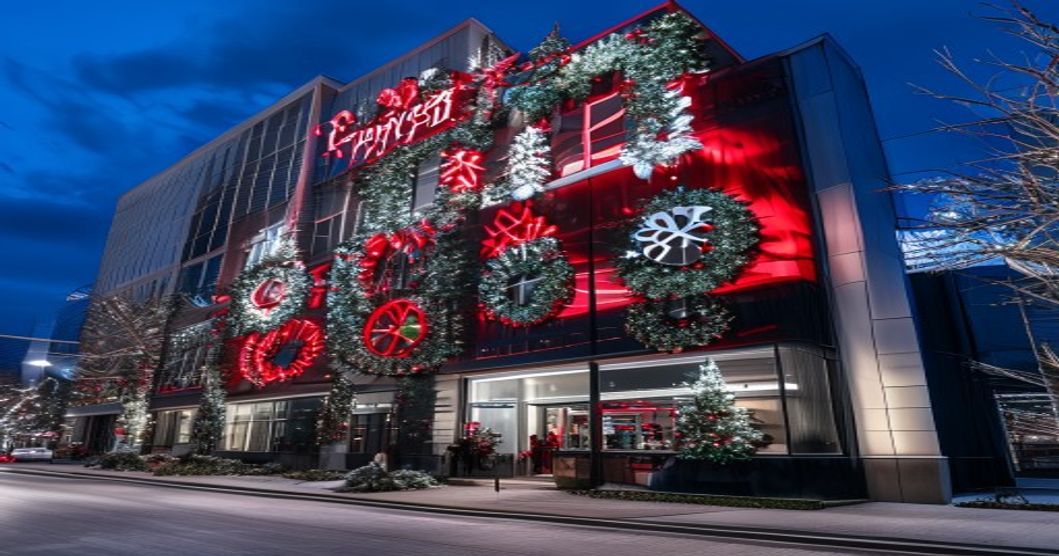
Walk any Maine downtown the first weekend of December and the retailers that draw foot traffic share one obvious trait: their storefronts glow. Not just a strand of lights tossed over a shrub, but a deliberate, fully realized light display — C9 bulbs tracing every roofline edge, fresh garland draping across awnings in precise swags, and warm white or cool white mini lights filling the window reveals with enough warmth to pull shoppers off a 20-degree sidewalk and through the front door. That result doesn't happen in November. It happens in July and August, when smart Maine business owners are already on the phone with their lighting crews.
Why Mid-Year Planning Is Non-Negotiable for Maine Retailers
Commercial holiday storefront lighting installation in Maine operates on a compressed calendar that punishes procrastination. By mid-October, professional installation crews are fully booked, C9 bulb and garland inventory from wholesale suppliers is allocated, and lift equipment rental windows are gone. The retailers left scrambling in late October either accept inferior results or simply go dark on the most profitable shopping weekends of the year.
Summer planning isn't just about availability — it's about design quality. When you book early, your installer has time to conduct a proper site survey, draft a layout drawing, pull permit applications if your municipality requires them, and source exactly the products your brand vision demands. Rushed November installs skip those steps, and the difference shows.
Our post on why Christmas-in-July early booking matters for Maine holiday lights breaks down the supply-chain and crew-scheduling math in detail — it's worth a read before you pick up the phone. Retailers who have used our commercial lighting services consistently report that their summer-booked installs look measurably better and cost 10–15% less than last-minute jobs, simply because we're not rushing.
Facade and Awning Layouts That Comply With Maine Municipal Display Codes
Maine municipalities regulate commercial exterior lighting displays through a patchwork of sign ordinances, zoning bylaws, and seasonal display codes — and the rules differ meaningfully from one community to the next.
Understanding What Maine Codes Typically Govern
While every jurisdiction is different, Maine municipal display codes for commercial properties most commonly address four areas:
- Projection limits: How far a display element (garland swag, hanging light strand, illuminated wreath) can extend beyond the building's property line or over the public sidewalk. Many Maine downtowns cap sidewalk projection at 8–10 feet and require a minimum clearance of 7 feet above grade.
- Roofline and parapet mounting: Whether lights can be affixed to the roof structure itself or must be mounted below the fascia. Some historic district guidelines in Maine prohibit fasteners that penetrate original masonry facades.
- Illuminated signage interaction: Holiday lighting that overlaps with or obscures a permitted illuminated business sign may require an amendment to your sign permit.
- Seasonal display windows: Most Maine cities define a permitted holiday display season — typically November 1 through January 15 — outside of which commercial exterior displays require a separate temporary-use permit.
Practical Layout Strategies for Common Maine Storefront Types
Maine retail buildings fall into a few recurring typologies, each with its own best-practice layout approach:
- Brick or granite block storefronts (common in Portland, Bangor, and Augusta downtowns): Use clip-mount systems that attach to mortar joints rather than drilling into face brick. Run C9 bulb strands along roofline soffits and window headers; layer fresh garland across awning top rails using adjustable zip-tie clips that leave no permanent marks.
- Victorian commercial blocks with decorative cornices: The cornice detail itself becomes a design asset. Mini lights tucked into cornice shadow lines create a backlit glow effect that reads beautifully from across the street without requiring any projecting hardware.
- Modern strip retail and plaza storefronts: Clean, linear C9 roofline runs paired with column wraps in mini lights deliver the most impact per linear foot of facade. Awning valances accept garland swags at 18–24 inch intervals for a full, professional finish.
- Harbor-facing and coastal retail (Kennebunkport, Bar Harbor, Rockland): Salt air and wind load demand marine-grade wiring, sealed socket C9 strands, and stainless hardware throughout. Our guide to holiday lights for coastal Maine saltwater properties covers material specs in depth — the same standards apply to coastal commercial buildings.
Before finalizing any layout, your installer should pull the relevant sections of your municipality's zoning ordinance and, for historic district properties, submit a Certificate of Appropriateness application to your local Historic Preservation Commission. We handle that paperwork as part of our commercial site-survey process.
Warm White vs. Cool White: Matching Light Color to Your Brand
Color temperature is the single most consequential aesthetic decision in your commercial display, and it should be driven by brand identity, not personal preference.
| Brand Profile | Recommended Color | Best Products | Effect on Shoppers |
|---|---|---|---|
| Boutique retail, artisan goods, hospitality, restaurants, inns | Warm white (2700–3000K) | Warm white C9 bulbs, warm white mini lights, fresh garland with warm white accents | Inviting, intimate, encourages lingering and impulse purchases |
| Contemporary fashion, tech accessories, health and wellness, modern home goods | Cool white (5000–6000K) | Cool white C9 bulbs, cool white mini lights on clean linear runs | Crisp, energetic, reinforces a modern brand identity |
| Traditional New England heritage brands, hardware, general merchandise | Warm white primary with cool white accents | Warm white garland wraps, cool white C9 roofline strand | Classic with a contemporary edge — broad demographic appeal |
| High-volume grocery, pharmacy, convenience | Cool white | Cool white mini lights in high-density window perimeter runs | Bright, clear visibility from parking areas; reinforces accessibility |
A Note on Mixing Colors
Mixing warm and cool white on the same facade requires deliberate zoning — one color per horizontal band or architectural element. Random mixing reads as disorganized and undermines both color choices. If your brand identity genuinely requires multicolor elements, introduce them as accent points (a single wreath with red berries, a bow in your brand color) against a unified warm or cool white field, never as competing strands running side by side.
Selecting the right products for Maine's winter conditions matters as much as color temperature. Our roundup of the best outdoor Christmas lights for Maine winter weather covers rated wattages, wet-location certifications, and cold-temperature performance specs for C9 bulbs and mini lights — essential reading before you finalize your equipment list.
The Complete Commercial Installation Timeline: Booked to Live by Black Friday
Black Friday weekend in Maine typically falls in the last week of November. Working backward from a target go-live date of Wednesday before Thanksgiving, here is the planning timeline that gives you the highest probability of a flawless opening night.
July – August: Design, Book, and Deposit
- Schedule your on-site commercial lighting consultation and facade measurement.
- Finalize your display design, product selections (C9 bulb type, mini light density, garland style and quantity), and color temperature strategy.
- Sign your installation agreement and submit your deposit to lock your crew date.
- If your property is in a historic district or requires a permit, submit applications now — Maine municipal review periods can run 4–8 weeks.
This is also the ideal time to think about permanent lighting systems if you want a year-round architectural solution that doubles as holiday lighting with a color-change feature.
September – October: Procurement and Pre-Build
- All C9 bulbs, mini light strands, garland, and hardware are ordered and received.
- Custom garland lengths are pre-cut and any specialty items (oversized bows, illuminated wreaths, branded ornaments) are fabricated or sourced.
- Lift equipment is reserved for your installation window.
- Your crew lead performs a final site walk to confirm mounting points, circuit load calculations, and GFCI outlet placement.
First Two Weeks of November: Installation
- Roofline C9 runs and structural mounting hardware go up first, while weather windows are most reliable.
- Garland swags are installed across awnings and window headers.
- Mini light window perimeter runs and column wraps are completed.
- Full electrical test, circuit labeling, and timer programming are completed.
- A daytime and nighttime quality walk-through is conducted before your crew demobilizes.
Week Before Thanksgiving: Soft Preview and Final Adjustments
- Display is live for a soft test period — allowing time to address any bulb replacements, timer adjustments, or layout tweaks before peak traffic begins.
- Photography for your social media and marketing materials is completed in this window.
Our detailed breakdown of how to plan your holiday lighting installation in Maine during summer expands on each phase of this timeline with additional checklists for both residential and commercial properties.
After the Season: Removal, Storage, and Next-Year Readiness
A commercial display that is left up too long signals neglect — and in Maine, January wind and ice storms can turn an unattended display into a liability. Schedule your removal for the first or second week of January, immediately after the permitted display season closes in your municipality.
Professional removal and storage services don't just take the lights down — they inspect every strand of C9 bulbs and mini lights for damage, replace failed sockets, re-coil garland properly to prevent tangling, and store everything in labeled, climate-appropriate containers. When your installer pulls your display out of storage next October, it should be ready to hang in the same condition it came down. That discipline is what separates commercial-grade operations from the retailers who buy new lights every year because their old ones are a tangled, broken mess.
Consider pairing your holiday program with professional tree lighting for any street-facing trees on your property — a lit tree visible from the road extends your display's draw radius and complements roofline and facade work beautifully.
Frequently Asked Questions
How early should a Maine retailer book commercial holiday storefront lighting installation?
Maine retailers should book their commercial holiday storefront lighting installation no later than August 1st for a guaranteed Black Friday weekend go-live date. By September, the best installation crews in Maine are fully scheduled, wholesale C9 bulb and garland inventory is allocated, and lift rental windows are closed. July bookings typically receive the widest selection of products, the most flexible scheduling options, and — in many cases — early-booking pricing advantages. Waiting until October or November almost always means compromises on timing, product quality, or both.
Do Maine municipalities require permits for commercial holiday lighting displays?
Many Maine municipalities do regulate commercial exterior holiday displays, though requirements vary significantly by community. Historic district properties in cities like Portland, Bath, and Ellsworth typically require a Certificate of Appropriateness before any exterior hardware is installed. Some downtowns require a temporary-use permit for displays that project over the public sidewalk or that operate outside the standard November 1–January 15 seasonal window. Your installer should review the relevant zoning and sign ordinances for your specific address before any work begins — permit applications submitted in July or August clear review well before your November installation date.
What is the difference between warm white and cool white C9 bulbs for a retail storefront?
Warm white C9 bulbs (2700–3000K color temperature) produce a soft, amber-toned glow that reads as inviting and intimate — ideal for boutiques, restaurants, inns, and artisan retailers whose brand emphasizes warmth, craft, or New England heritage. Cool white C9 bulbs (5000–6000K) produce a crisp, blue-toned brightness that reads as modern and energetic — better suited to contemporary fashion retailers, tech and wellness shops, and high-visibility commercial applications where maximum brightness matters more than ambiance. The right choice is always brand-driven: pick the temperature that reinforces what your store already communicates to customers.
How much does commercial storefront holiday lighting installation cost in Maine?
Commercial storefront holiday lighting installation in Maine typically ranges from $1,200 to $8,000+ depending on facade linear footage, building height (which determines lift equipment requirements), product selection, and whether the engagement includes removal and storage at season's end. A single-story Main Street storefront with a roofline C9 run, two awning garland swags, and window mini lights generally falls in the $1,500–$3,000 range. Multi-story facades, corner locations with two exposed elevations, or properties requiring a full complement of wreaths, garland, and illuminated signage elements will land higher. The most accurate way to get a number is to request a free on-site estimate so your installer can measure the actual facade and price the exact products your display requires.
Can commercial holiday lights withstand Maine's winter weather, including ice and heavy snow?
Yes — but only if the right products are specified and installed correctly. Commercial-grade C9 bulb strands and mini light sets rated for wet locations and cold-temperature operation (typically rated to -40°F) hold up well to Maine winters when mounted with appropriate hardware and routed to avoid ice dam zones. Fresh garland should be secured with enough tie-off points (every 18–24 inches on awning runs) to prevent wind loading from pulling swags loose. All exterior connections must use weatherproof connectors and be positioned so pooling meltwater drains away from the socket. Professional commercial installers in Maine spec these details as standard; DIY or inexperienced crews frequently cut corners that result in failures during the season's most important weekends.
Does Holiday Lights Decor Maine serve commercial clients outside of the Portland metro area?
Yes — Holiday Lights Decor Maine provides commercial holiday storefront lighting installation across the state, including coastal communities, western Maine towns, and the Bangor and Augusta markets. Our municipal lighting services also extend to town centers, public plazas, and civic properties throughout Maine. If you're outside a major metro area, booking earlier is even more important, as crew scheduling in rural and coastal regions fills faster relative to local demand. Contact us to confirm service availability for your specific location.
Ready to get your Maine retail storefront on the calendar before the summer window closes? Request your free commercial lighting estimate today — our team will schedule an on-site consultation, walk your facade, and put together a detailed proposal with product specs, layout drawings, and a firm installation date that has you glowing by Black Friday weekend.