Key Takeaways
- Mini lights outperform net lights on Maine's birch, maple, and spruce trees because they follow irregular branch patterns and survive freeze-thaw cycles better.
- Wrapping branch-by-branch — rather than trunk-only — prevents the bare, patchy look that appears after autumn leaf drop in Maine's hardwood trees.
- A reliable rule of thumb: plan 100 mini-light bulbs per foot of tree height, then add 20–30% for canopy spread on mature maples and birches.
- Warm white mini lights suit Maine's colonial and craftsman homes; cool white creates a crisp, ice-blue effect that complements snowy landscapes and coastal properties.
- Summer planning — ordering strands, scouting anchor points, and mapping circuits — means you beat product shortages and install before November ground freeze.
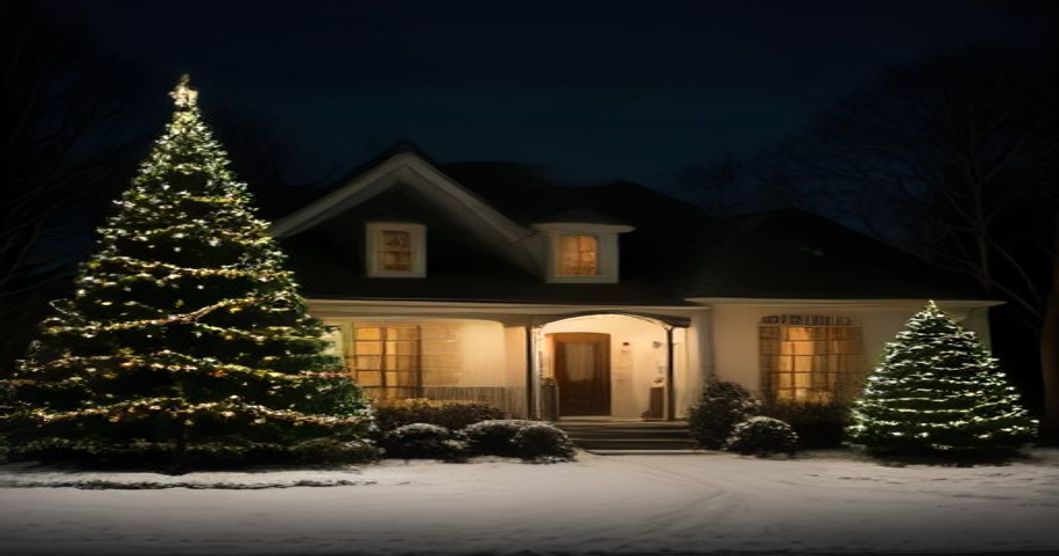
Picture it: a February night in Maine, temperatures sitting at twelve degrees, and your front yard sugar maple absolutely glowing with hundreds of warm white mini lights traced along every branch. The snow holds the light, the street slows down, and neighbors who spent October scrambling find themselves wishing they had planned ahead. That scene does not happen by accident, and it almost never happens when you start thinking about tree lighting in November. The homeowners who pull it off every single year — the ones whose properties look like a magazine cover rather than a last-minute afterthought — begin planning in summer, when the branches are full, the ground is soft, and the best mini-light strands are still in stock.
Why Summer Is the Right Season to Plan Tree Lighting in Maine
Summer is the ideal planning window for tree lighting because Maine's installation season compresses fast: by late October, leaves are gone, daylight is short, and early frosts make ladder work dangerous. Starting in July or August gives you three critical advantages.
First, you can actually see the full canopy. A sugar maple in full leaf tells you exactly how wide the crown spreads, where the branch density is heaviest, and which limbs dip low enough to need extra light coverage. That same tree in November is a skeletal silhouette — harder to read, harder to plan around.
Second, product availability is real. Quality commercial-grade mini lights sell out at distributors by September. If you wait until October to order 2,000 feet of warm white strands, you may end up with mismatched bulb temperatures from multiple production runs — a subtle but noticeable inconsistency once the lights are all on.
Third, professional installers — including our crews at Holiday Lights Decor Maine — have full availability in summer for site consultations, measurements, and pre-season booking. By October we are fully scheduled. Our guide to summer holiday lighting planning in Maine walks through the full seasonal timeline if you want a broader view of why getting ahead pays off.
Choosing Mini Lights vs. Net Lights for Maine Tree Species
Mini lights are the better choice for nearly every Maine tree species because they conform to irregular branch geometry in ways that net lights simply cannot. Here is how that plays out across the three species Maine homeowners most commonly want to illuminate.
White Birch
Maine's white birch is iconic — the pale bark practically glows on its own, and lighting it well means letting that bark show through rather than burying it. Net lights draped over a birch look like a cargo net; the geometric grid fights the organic, weeping branch structure. Mini lights strung along individual branches from the trunk outward let the white bark remain visible, creating a lantern effect that makes even a modest birch look stunning. Cool white mini lights are especially effective here because the light temperature echoes the silvery bark.
Sugar Maple and Red Maple
Maine maples have dense, spreading crowns with hundreds of secondary and tertiary branches. Net lights work reasonably well on compact, conical trees, but a mature maple's canopy is wide and irregular — nets leave dark pockets where branch angles shift. Mini lights on a branch-by-branch wrap fill those gaps. For maples, warm white is the dominant choice among Maine homeowners because it evokes the amber and gold of the tree's own autumn color, carrying that warmth into the winter months.
White Spruce and Balsam Fir
Conifers are the one exception where net lights can work adequately on small, symmetrical specimens. But on a mature Maine spruce — ten, twelve, fifteen feet tall with horizontal branch tiers — mini lights wrapped along each branch tier produce dramatically more depth and dimension. The light travels through the needles rather than sitting on the surface. Warm white on spruce reads as traditional and cozy; cool white on spruce gives a stark, northern-forest quality that suits contemporary and coastal properties. See our post on holiday lights for coastal Maine saltwater homes for more on light color choices in high-exposure environments.
| Tree Species | Recommended Light Type | Best Color Temperature | Net Lights Viable? |
|---|---|---|---|
| White Birch | Mini lights, branch-wrapped | Cool white | No — grid conflicts with weeping form |
| Sugar / Red Maple | Mini lights, branch-wrapped | Warm white | No — crown too irregular |
| White Spruce / Balsam Fir | Mini lights, tier-wrapped | Warm white or cool white | Yes, on small symmetrical specimens only |
The Branch-by-Branch Wrapping Technique for Maine Trees
The branch-by-branch method eliminates bare spots after leaf drop by ensuring every structural limb carries light — not just the trunk or outer canopy surface. Here is how to execute it correctly.
Step 1: Start at the Trunk, Work Outward
Begin at the base of the trunk and spiral the strand upward with roughly two-inch spacing between coils. Do not pull tight — Maine's freeze-thaw cycle causes wood to contract slightly, and a strand with no slack will stress both the wire and the bark. When you reach the first major branch fork, follow each primary branch outward before returning to continue up the trunk.
Step 2: Follow Every Primary Branch to Its Tip
On each primary branch, start at the union with the trunk and spiral outward. Tighten the spacing slightly as the branch tapers — narrower wood needs less coil distance to look full. Leave four to six inches of slack at the tip so the branch can flex under snow and ice loading without pulling the strand loose. This is especially important in Maine, where a single ice storm can add significant weight to even medium-sized branches.
Step 3: Address Secondary and Tertiary Branches
Secondary branches — the offshoots from primaries — are where most DIY wraps fail. Skipping them is why trees look sparse after leaf drop. On a maple with a full canopy, the leaves fill the visual gaps; once those leaves are gone, the unwrapped secondary branches become obvious dark gaps. Wrap at least the first eighteen to twenty-four inches of every visible secondary branch on hardwood trees. On birch, wrap all the way to the tips of the longer pendant branches for the lantern effect described above.
Step 4: Connect Strands and Manage Cords
Use waterproof inline connectors rated for outdoor use — standard indoor-style plug connections trap moisture and corrode after a Maine winter. Run your extension cords along the underside of branches rather than over the top, where ice and snow can sever the connection or pull the strand down. Stake extension cords to the ground in a shallow channel if they cross lawn areas, and use ground stakes rated for outdoor burial.
For a deeper look at which light products hold up through Maine winters specifically, our post on the best outdoor Christmas lights for Maine winter weather covers weatherproofing, bulb ratings, and wire gauge recommendations.
How to Estimate Mini Light Strand Quantities
Estimating light strand quantities accurately prevents both the frustration of running short mid-install and the cost of over-buying. Use these formulas during your summer planning phase.
The Baseline Formula: Height × 100 Bulbs
A standard starting point for any tree is 100 mini-light bulbs per vertical foot of tree height. A fifteen-foot maple needs roughly 1,500 bulbs as a baseline. Most commercial mini-light strands run 100 bulbs per strand at approximately 32–35 feet of lighted length, so that fifteen-foot maple needs approximately fifteen strands as a starting inventory.
Adjusting for Canopy Spread
Trunk diameter and canopy width require adjustments to the baseline:
- Trunk diameter under 6 inches: use the baseline formula.
- Trunk diameter 6–12 inches: add 25% to the baseline quantity.
- Trunk diameter over 12 inches (mature maple or oak): add 40–50% — the extra girth means more wraps per vertical foot.
- Canopy spread over 20 feet wide: add one strand per every two feet of diameter beyond twenty feet.
A Worked Example: Mature Sugar Maple
- Tree height: 18 feet. Baseline: 18 × 100 = 1,800 bulbs.
- Trunk diameter: 14 inches. Adjustment: +50% = 2,700 bulbs.
- Canopy spread: 28 feet. Extra 8 feet beyond 20-foot threshold = 4 additional strands = 400 bulbs.
- Total estimate: approximately 3,100 bulbs, or 31 strands of 100-count mini lights.
- Order buffer: add 10–15% extra for breakage and replacements. Final order: 34–36 strands.
These numbers hold whether you are using warm white or cool white mini lights — the quantity math is the same; only the visual effect changes. Our professional tree lighting service includes a full site measurement and strand estimate at no charge when you book before September.
Maine-Specific Considerations: Weather, Wildlife, and Code
Maine's environment introduces challenges that homeowners in milder climates simply do not face. Planning for them in summer means they do not derail your installation in November.
Ice Loading and Branch Flex
Maine averages two to four significant ice storms per winter in most inland and central counties. Ice loading on a fully wrapped branch can be substantial — the combination of the strand weight and ice accumulation. Always leave slack at branch tips, use 22-gauge or heavier wire strands, and avoid wrapping branches under four inches in diameter too tightly on birch trees, which are prone to breakage under ice load.
Moose and Deer Browsing
In rural and suburban Maine — particularly in areas bordering woodlands — deer will investigate low-hanging light strands. Keep the lowest strand connections and extension cord runs at least five feet off the ground when possible, or use a bungee-style ground anchor that gives way rather than pulling the strand off the branch.
Municipal and HOA Regulations
Some Maine municipalities and neighborhood associations have display period restrictions or light-intensity guidelines. Check local ordinances before planning a large-scale multi-tree installation. Our municipal lighting services team navigates these regulations regularly and can advise residential clients in affected communities.
Warm White vs. Cool White: Making the Call for Your Property
Warm white mini lights (approximately 2,700–3,000K color temperature) produce an amber-gold glow that reads as traditional, cozy, and welcoming — the visual language of hearth light. Cool white mini lights (5,000–6,500K) produce a crisp, blue-tinged brilliance that feels modern, icy, and dramatic against snow.
For colonial, cape cod, and farmhouse-style Maine homes, warm white almost always wins — it matches the architectural warmth of clapboard siding and wooden window trim. For contemporary, coastal, and Scandinavian-influenced properties, cool white is striking, particularly on white birch or spruce where the color temperature amplifies the natural silvery or blue-green tones of the tree itself. A third option that works especially well on multi-tree installations: warm white on the maples closest to the house, cool white on the specimen birch at the property edge, creating visual depth across the yard.
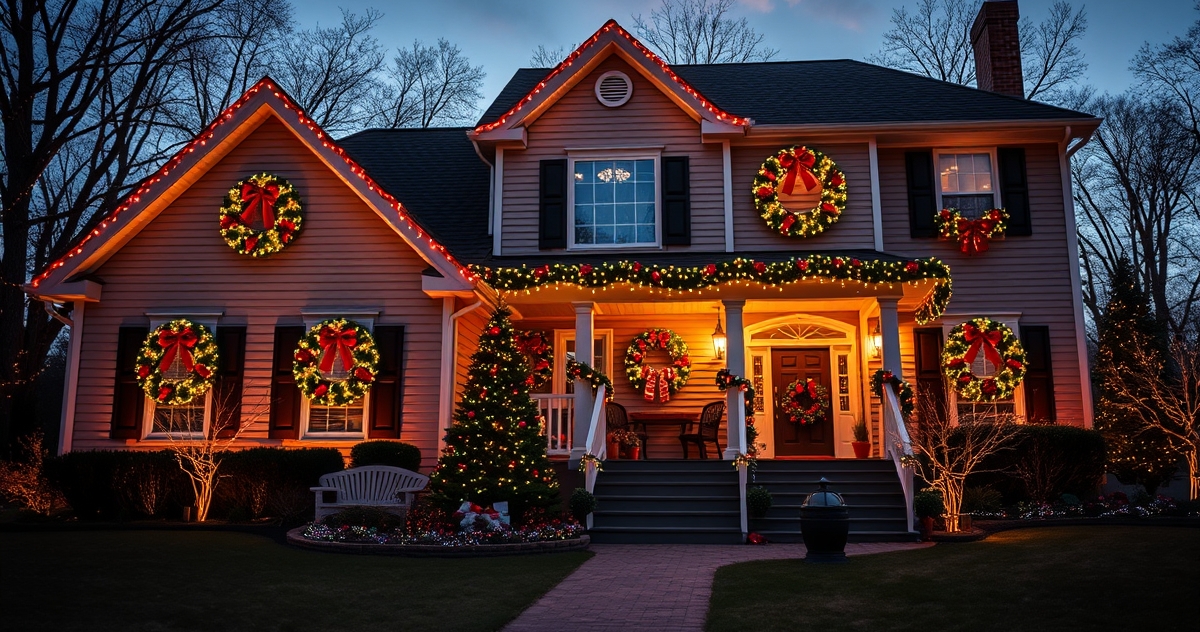
If you are planning decorative lighting beyond trees — think garlands on porch railings, wreaths on doors, or bows on lamp posts — keeping your color temperature consistent across all elements produces a polished, intentional look. Our residential holiday lighting service includes a design consultation that covers exactly this kind of whole-property cohesion.
Frequently Asked Questions
How many mini lights do I need to wrap a birch tree in Maine?
For a typical Maine white birch standing ten to twelve feet tall with a trunk diameter under six inches, plan on 1,000–1,200 bulbs (ten to twelve strands of 100-count mini lights) using the branch-by-branch method. Add a 15% buffer for replacements. Birch branches are relatively slender, so you will use slightly fewer coils per foot of branch length than on a thick-limbed maple, but you will wrap more individual branches due to the tree's multi-stem, pendant form.
What is the best way to keep lights on tree branches through a Maine ice storm?
The best approach is to leave four to six inches of slack at every branch tip, use 22-gauge or heavier strand wire, and secure strands with UV-rated zip ties at branch unions rather than relying on the wire tension alone. Avoid wrapping too tightly around branches under four inches in diameter on birch trees, which are prone to storm breakage. Commercial-grade strands with shatterproof mini bulbs also reduce the attrition from ice impact compared to standard bulbs.
Can I use net lights on a Maine spruce tree instead of mini lights?
Net lights can work on small, symmetrical spruce trees under eight feet tall with a conical shape. On any mature white spruce or balsam fir with horizontal branch tiers, net lights produce a flat, surface-level look with visible dark gaps between tiers. Mini lights wrapped along each branch tier create depth and fill those gaps naturally. For a specimen tree — one that is a focal point of your yard — mini lights are worth the extra installation time.
Should I hire a professional to wrap my trees, or is this a DIY project?
Single small trees under twelve feet are manageable DIY projects for homeowners comfortable on an eight-foot ladder. Mature trees over fifteen feet, multi-tree installations, or any project requiring work over twelve feet off the ground are best handled by professionals with the right equipment and outdoor electrical expertise. Maine's early freeze dates and short installation windows also make professional scheduling a practical advantage — our crews complete installations faster and without the risk of working in deteriorating weather conditions.
What gauge extension cord should I use for outdoor tree lighting in Maine?
Use a minimum 16-gauge outdoor-rated extension cord for runs under 25 feet, and step up to 14-gauge for runs between 25 and 50 feet. In Maine's wet and freezing conditions, always choose cords with a rubber or vinyl jacket rated for outdoor use (look for SJTW or SJTOW designations on the cord). Never daisy-chain more than three extension cords together, and keep all connections elevated off the ground surface to prevent water intrusion during freeze-thaw cycles.
How early in the summer should I start planning tree lights for the holidays?
July is the ideal start for planning, and August is the practical deadline for ordering product. By July you can see the full canopy for accurate measurements, and ordering in July or August ensures you receive commercial-grade mini lights before early-season sellouts hit in September. Professional installation bookings at Holiday Lights Decor Maine fill up quickly in September and October — summer booking guarantees your preferred installation date before the rush.
Ready to stop guessing and start planning? Whether you have a single birch at the end of your walk or a dozen maples lining a long driveway, our team at Holiday Lights Decor Maine will measure, estimate, and install a display that holds up through every Maine winter the season throws at it. Contact us today for a free estimate — summer consultations are available now, and slots fill faster than you expect.